
Onhold A Shot in the Dark
Play Onhold A Shot in the Dark
Onhold A Shot in the Dark Screenshots
























Onhold A Shot in the Dark review
Master every choice, unlock all achievements, and discover hidden endings in this story-driven visual novel
A Shot in the Dark stands out as a choice-driven narrative experience that puts your decisions at the center of the story. Every selection you make shapes the narrative, unlocking different character routes, alternative endings, and hidden achievements. Whether you’re pursuing a specific character’s storyline or aiming to complete the game 100%, understanding the game’s mechanics and decision points is essential. This comprehensive guide walks you through the key choices, character interactions, and achievement requirements to help you experience everything this immersive visual novel has to offer.
Understanding A Shot in the Dark: Game Mechanics and Story Structure
Ever feel like you’re just clicking through a story, hoping for the best? 😅 I sure did when I first booted up A Shot in the Dark. I made what I thought was a harmless joke early on, only to find myself completely locked out of a character’s trust—and her entire story branch—hours later. That’s when it clicked: this isn’t just a story you read; it’s a delicate web you navigate. The A Shot in the Dark gameplay mechanics are built entirely around the weight of your decisions, transforming every click from a passive action into an active, consequential choice.
Welcome to the heart of this unique choice-driven visual novel. Forget simple good or evil meters. Here, your personality, your attentiveness, and even your silences craft a narrative that feels intensely personal. This guide will break down exactly how the game’s systems work together, helping you understand the pathways to every connection and every conclusion. Think of it as your map through the dark. ✨
How Choice-Driven Gameplay Works in A Shot in the Dark
At its core, the A Shot in the Dark gameplay mechanics are deceptively simple: you read, and you choose. But the magic—and the complexity—lies in what those choices represent. There is no omnipotent “affection point” counter ticking in the corner for each character. Instead, the game builds an internal profile of your protagonist based on a tapestry of smaller decisions.
Your major dialogue picks are the obvious drivers. Will you be confrontational or conciliatory with a detective? Supportive or skeptical of a friend’s theory? These set the direction. However, the game is constantly listening through its minor, often silent, interactions. Did you examine a specific photograph on a character’s desk? 🖼️ The game notes your curiosity. Did you choose to stay late at the bar instead of heading home? It registers your investment in the moment. These actions build what I like to call your “character affinity”—not just with the individuals, but with the themes of the story itself.
The most crucial system at play is the flags and triggers. Think of a “flag” as a switch that gets set, often invisibly, when you make a key decision or perform a specific combination of actions. A “trigger” is a story moment that checks for those flags. For example, to access a private conversation with Sara in Chapter 4, the game might check if you both defended her in an earlier argument and discovered her hidden sketchbook. Missing just one element means that door stays closed, creating the game’s signature visual novel branching paths.
Pro Tip: The game autosaves at every chapter start, but the real power lies in manual saves. Before any major story beat or conversation, create a new save. I label mine like “Ch3_PreBar_MaiRoute” to stay organized. This habit is your single best tool for exploration.
This structure makes every playthrough feel valid and unique. You’re not playing a “paragon” or “renegade” run; you’re embodying a specific version of the protagonist, and the story reacts with astonishing consistency. It’s a masterclass in choice-driven visual novel design where your intuition and role-playing are the primary controllers.
Character Routes and Relationship Mechanics
This is where A Shot in the Dark truly shines. The six core A Shot in the Dark character routes aren’t just romantic subplots tacked onto a mystery; they are integral lenses through which the central narrative is viewed. Each character holds a different piece of the puzzle, and aligning yourself with them changes what information you uncover, what scenes you witness, and ultimately, what truth you believe.
Pursuing a route isn’t about always saying the nice thing. It’s about demonstrating understanding and compatibility with that character’s core values. Are they driven by logic, emotion, justice, or self-preservation? Your choices must resonate on that frequency. The relationship mechanics visual novel fans will recognize are present but deeply nuanced. It’s less about “gaining points” and more about consistently choosing actions that build trust and intimacy specific to that person.
Let me give you a personal case study: Alexis’s route. 🎭 Initially, her aloof, analytical demeanor pushed me away. On my first run, I matched her with cold logic. It got me nowhere—she saw me as a rival, not an ally. On my next attempt, I tried blunt emotional appeals. Worse. It was only when I paid attention to the subtext of her analyses—the care hidden beneath her clinical observations—and chose responses that valued her intellect while acknowledging the human cost, that her walls began to crumble. The route unlocked not because I was perfect, but because I was perceptive.
To help you navigate these complex connections, here’s a breakdown of the core routes:
| Character | Key Personality Traits | Critical Story Moments | Relationship Requirements |
|---|---|---|---|
| Mai | Intuitive, Protective, Secretive | The rooftop confrontation in Chapter 2; deciding to share your findings in Chapter 5. | Show consistent loyalty and a willingness to operate outside strict rules. Defend her instincts even when evidence is scarce. |
| Natalie | Empathetic, Guilt-Driven, Observant | The hospital visit scene; the choice to confront her about the past. | Prioritize emotional honesty and compassion. Choose gentle confrontation over avoidance when secrets arise. |
| Sara | Creative, Withdrawn, Perceptive | Finding her hidden art studio; interpreting the symbolism in her paintings. | Demonstrate curiosity about her art and inner world. Value her unique perspective over conventional answers. |
| Alexis | Analytical, Ambitious, Guarded | The evidence lockup debate; accepting or rejecting her final gamble. | Respect her intellect and ambition. Engage with her logically, but acknowledge the ethical dimensions she overlooks. |
| Sophie | Charming, Manipulative, Strategic | The offer of a partnership; the choice to trust her network. | Play the social game with savvy. Show you understand power dynamics and are willing to make pragmatic, if risky, alliances. |
| Delia | Mysterious, Direct, Unattached | The late-night phone call; the decision to follow her lead without question. | Embrace ambiguity and don’t demand immediate answers. Show trust through action rather than words. |
Navigating these A Shot in the Dark character routes requires you to be present in each interaction. The game expertly weaves their personal struggles with the main plot, meaning that advancing a relationship often directly advances your understanding of the central mystery—but only from that character’s biased perspective. 🧩
Multiple Endings: What Determines Your Story Outcome
The culmination of every whispered secret, every hard choice, and every trusted ally is the game’s finale. A Shot in the Dark boasts a spectrum of conclusions, making the pursuit of A Shot in the Dark multiple endings a deeply rewarding, if complex, endeavor. Your ending is not chosen in a final menu; it is earned across the entire journey.
Endings are primarily determined by two interlocked factors: which character route you have most deeply aligned with, and key narrative choices in the final two chapters. Think of the character route as determining who you are with at the end and what resources you have, while the final choices determine what you do with that position to resolve the core mystery.
There are three broad categories of endings:
* Route-Specific Resolutions: These are the most common endings, where the mystery’s conclusion is deeply intertwined with your primary relationship. Achieving Mai’s “True Resolution,” for example, requires not just completing her route but also making a specific, gut-wrenching sacrifice in the name of her definition of justice in Chapter 7.
* The Solver Endings: These are harder to achieve and require a more balanced playthrough where you gathered crucial evidence from multiple characters without becoming overly entangled with any single one. It represents solving the case through sheer deduction and personal integrity.
* The Fallen Endings: These are the tragic conclusions, often resulting from a critical failure of trust, a major misjudgment, or pursuing truth at the expense of every human connection. They are hauntingly powerful and essential to the game’s themes.
So, how to unlock all endings? It requires a strategic, systematic approach. You cannot see everything in one or two runs. Here is your step-by-step guide to exploring every branch:
- Blind First Playthrough: Go in completely fresh. Don’t save-scum. Live with your choices. This authentic run will give you your personal ending and is the most powerful way to experience the game’s consequences.
- Create a Master Save Point: Start a new game and save immediately after the prologue (Chapter 1). This is your “clean slate” save to return to for major branching.
- Pursue Single Routes: Load your master save and commit fully to one character. Follow the requirements from the table above. Before the final two chapters, create a dedicated save. This lets you experiment with the final choices for that route to see its variations.
- The Evidence Collector Run: This is for the “Solver” endings. From your master save, make choices that keep you on good terms with at least three characters, but avoid the deep, exclusive triggers of any one route. Prioritize choices that gather physical evidence and diverse perspectives.
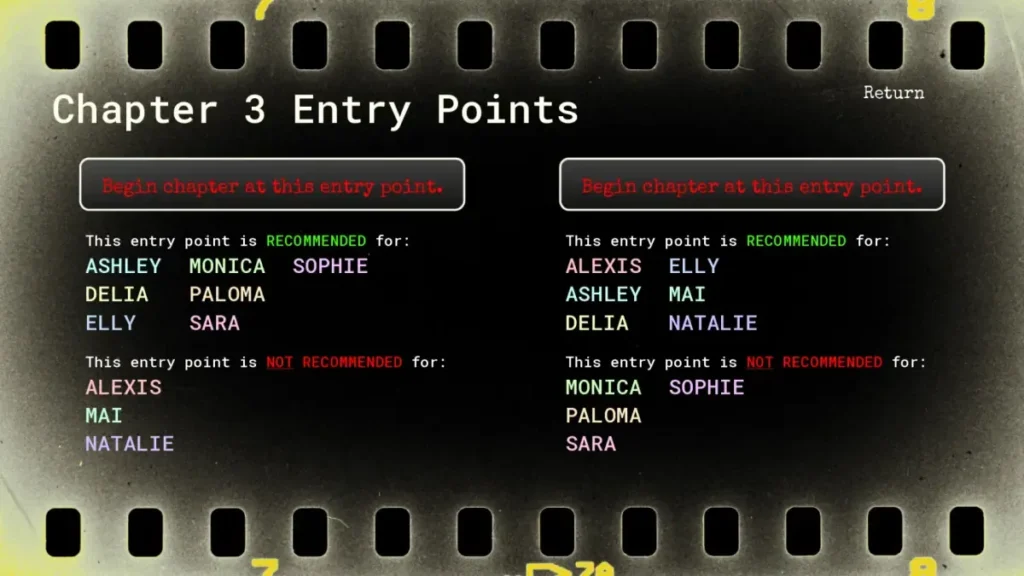
- Check Your Triggers: Use multiple saves to test critical junctions. For instance, in Chapter 3, there’s a party scene. Make one save where you circulate and talk to everyone, and another where you spend the entire time with one person. Reload and compare how the next chapter opens.
- Embrace the Dark: Don’t shy away from making “bad” choices on dedicated runs. To see a “Fallen” ending, you often need to systematically break trust, fail key investigations, or prioritize the case over people at every turn.
A crucial note: A Shot in the Dark deals with mature themes, including psychological tension, moral ambiguity, and moments of violence. Its strength is in not shying away from darkness, but it’s important to be in the right headspace for its story. 🕯️
By understanding these A Shot in the Dark gameplay mechanics—the silent flag system, the deeply personal relationship mechanics, and the cascading effect of choices on visual novel branching paths—you transform from a passive reader into the author of your own compelling, and often heartbreaking, tale. The path to mastering A Shot in the Dark multiple endings is long, but every discovery feels earned, and every ending adds a crucial piece to the magnificent, unsettling whole. Now, with your manual saves ready and your instincts sharpened, step back into the dark. This time, you’re prepared.
A Shot in the Dark delivers a compelling narrative experience where your choices genuinely matter. By understanding the game’s mechanics, character routes, and decision trees, you can unlock every achievement and experience all the story variations this visual novel offers. Whether you’re pursuing a specific character’s ending or aiming for 100% completion, using save points strategically and following this guide ensures you won’t miss any crucial story moments. Take your time exploring different paths, and don’t hesitate to reload saves to experience alternative outcomes. The depth of A Shot in the Dark lies in its branching narratives and character development, making each playthrough a unique journey shaped entirely by your choices.