
Time Loop Hunter
Play Time Loop Hunter
Time Loop Hunter Screenshots



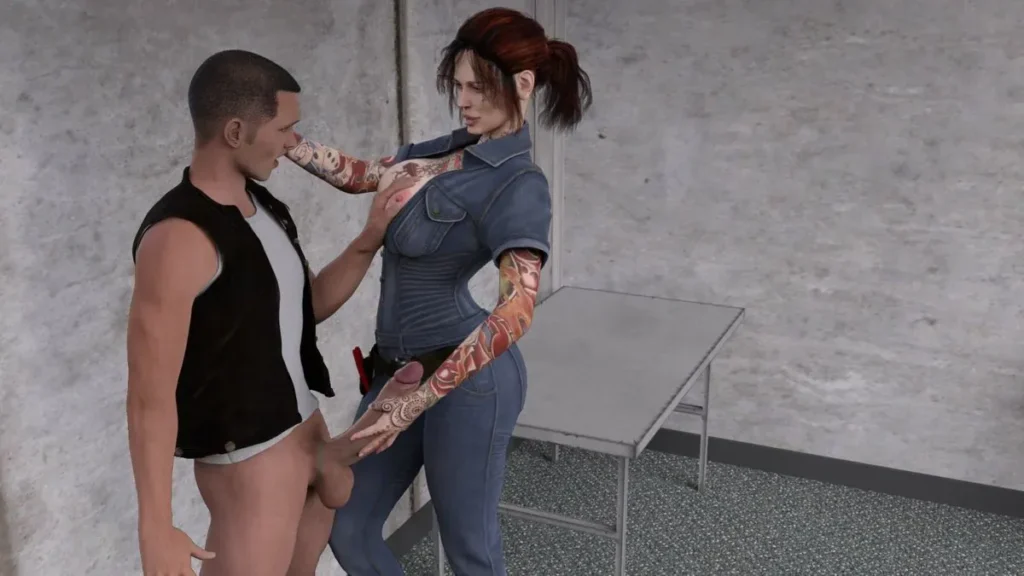



Time Loop Hunter review
Uncover the narrative depth, character arcs, and branching storylines in this complex interactive experience
Time Loop Hunter stands out as a narrative-driven interactive experience that weaves complex storytelling with player choice mechanics. This guide explores the game’s intricate plot, character relationships, and the various pathways players can take through its branching narrative. Whether you’re seeking story clarification, character background information, or gameplay walkthroughs, this comprehensive overview covers the essential elements that make Time Loop Hunter a unique experience. Understanding the game’s narrative layers and character motivations enhances appreciation for its sophisticated approach to interactive storytelling.
Understanding Time Loop Hunter’s Narrative Structure
Ever been stuck in a game, made one wrong choice, and felt like you’d ruined everything? 😩 You’re forced to reload an old save, losing hours of progress, just to see the story play out “correctly.” Time Loop Hunter completely rethinks that frustrating experience. Instead of punishing you, its brilliant narrative structure uses the core mechanic of repetition as the ultimate tool for storytelling and exploration.
This isn’t a simple “groundhog day” gimmick. The loop is the lens through which every character, secret, and consequence is revealed. Your first run is just the surface layer—a tantalizing, often tragic, prologue. True understanding, and the path to every ending, comes from embracing the cycle. Let’s dive into how this interactive narrative game design turns repetition into revelation.
How the Time Loop Mechanic Shapes Storytelling
At its heart, the Time Loop Hunter story explanation is about knowledge as power. 🕰️ On Day One, you’re as clueless as the protagonist. A catastrophic event occurs, everyone dies, and boom—you’re back at the beginning. But you remember everything. This creates an incredible form of dramatic irony. You hear characters make plans you know will fail, voice fears you’ve already seen realized, and trust people you’ve learned are hiding secrets.
The game’s genius is in how it layers information. Early loops are about brute survival and gathering basic facts. Where does the monster strike first? Who has the key to the armory? But soon, you shift from what is happening to why. You use your foreknowledge to ask different questions, be in new places at critical moments, and present evidence from “future” events that characters couldn’t possibly know. I remember on my third loop, I casually mentioned a coming storm to the reclusive Janice. Her shocked reaction—”How could you know that?”—unlocked an entirely new dialogue tree about her past that was never available before.
This structure makes every playthrough meaningful. You’re not repeating content; you’re conducting deeper interviews with the world. A throwaway line in loop one becomes a crucial clue in loop five. The predetermined events of each day (the “predetermined narrative elements”) act as a stage, but your accumulated knowledge lets you direct the actors in new ways. This is the core of player choice mechanics storytelling in Time Loop Hunter—choices aren’t just about A or B in a dialogue box, but about which piece of future knowledge you decide to act upon, and when.
Pro Tip: Treat your first 2-3 loops as pure information gathering. Don’t worry about “saving” everyone. Take notes on times, locations, and cryptic phrases. This intel is your most powerful weapon in later cycles.
Character Development Across Multiple Playthroughs
If the loop shapes the plot, it absolutely defines the characters. Saying Time Loop Hunter has character development multiple endings is an understatement. Characters like Dana, Alice, and Janice aren’t static entities with one backstory. They are puzzles whose pieces are scattered across different timelines, and only you can assemble the full picture.
On your first meeting, Dana might seem like a stubborn, by-the-book leader. In a loop where you fail to gain her trust, she remains that way—a barrier to your goals. But in a loop where you use early knowledge to prevent a minor tragedy that haunts her, her walls come down. You see the guilt driving her, the weight of command, and a vulnerability that changes her entire decision-making process for the rest of that cycle. Her character development is directly tied to the trust and evidence you bring from previous loops.
This is where the game truly shines. Let’s look at the key characters and the arcs you can uncover:
| Character | Initial Impression | Core Arc Unlocked Through Loops |
|---|---|---|
| Dana | The Stoic Leader 🛡️ | Her arc revolves around guilt over a past failure. By preventing specific events or showing her proof of her own heroism in alternate loops, you can shift her from a defensive commander to an inspired, hopeful one. |
| Alice | The Anxious Scientist 🔬 | Her fear is rooted in a hidden, half-understood discovery. Providing her with data from different failure points across loops helps her complete her research, transforming her from a victim into the key to potentially breaking the cycle. |
| Janice | The Secretive Outsider 🌲 | She seems disconnected, but her arc is about ancestral knowledge of the area’s strange phenomena. Earning her trust across multiple loops by respecting her methods reveals she’s not a coward, but a keeper of dangerous secrets. |
Watching these personalities evolve—or devolve, based on your actions—is the soul of the game. A Time Loop Hunter story explanation must emphasize that there is no “true” version of these people. The compassionate Alice you help in one branch is as real as the paranoid, broken Alice you might create in another. Their development is a mirror of your own playthrough’s priorities and morality.
Branching Paths and Player Agency in Time Loop Hunter
So, how do your choices actually weave these different character threads into distinct endings? The branching storylines interactive game design of Time Loop Hunter is less a tree and more of a web, with knowledge as the connective tissue. 🕸️
Player agency feels immense because your power grows with each reset. Early loops offer limited branches—maybe you save Person A or Person B. But later, with more knowledge, you can engineer scenarios where you save both, or use your understanding to redirect the threat entirely, creating a branch that never existed before. It’s not about having a million choices at a single moment; it’s about having the right piece of information at the right moment to unlock a path that was logically always there, but hidden.
For example, reaching the armory might require a key held by a character who dies early. One branch is to race to save them. But another branch, unlocked after you learn about a hidden vent system in a prior loop, is to bypass the key altogether. The narrative accommodates both, but the outcomes diverge wildly. Saving the key-holder might earn their loyalty, while sneaking in might breed suspicion later.
This is the elegant dance of the game’s interactive narrative game design. Your freedom is channeled through the established rules of the loop and the world. You can’t do anything, but you can try everything. The process of how to unlock all endings Time Loop Hunter relies on this experimental approach. You must make different core alliances, share (or withhold) critical information, and succeed (or intentionally fail) at key events to steer the story toward its various conclusions.
The endings themselves range from bleak solitary survivals to bittersweet partial victories, to one incredibly difficult-to-achieve “true” ending that requires a symphony of perfectly-timed actions across multiple loops. Unlocking them all isn’t about checklists; it’s about understanding the profound cause and effect your loop-borne knowledge creates.
Frequently Asked Questions
Q: How many endings are there, really?
A: Most players agree there are five core endings, but with subtle variations based on your final relationships. The community has labeled them roughly as: The Sole Survivor, The Sacrifice, The Compromise, The New Beginning, and The Secret ending (often called the “Loopbreaker” ending). 🏁
Q: Do I need to play the game a dozen times to see everything?
A: Not necessarily! The game smartly lets you fast-forward through dialogue you’ve seen and skip to key decision points once you’ve unlocked them. A dedicated completionist run might take 6-8 focused loops, as you carry knowledge forward to access new areas and conversations efficiently.
Q: Can I permanently “miss” an ending?
A: No, and this is the beauty of the loop. You can never permanently miss anything. Even if you burn every bridge in one loop, the next reset is a clean slate (though your personal knowledge isn’t!). This removes the anxiety of “ruining” your save and encourages bold experimentation.
Q: How do I know which choices are the big branching ones?
A: The game rarely signals it with flashing lights. Pay attention to character reactions. If someone gets profoundly angry, grateful, or shares a deep secret, you’ve likely nudged them onto a new path. Major branches usually stem from a combination of several related choices, not a single yes/no.
Q: What’s the best piece of advice for a first-time player?
A: Embrace the failure. 🎯 Your first loop will almost certainly end badly. That’s not just okay—it’s essential. That tragic outcome is the foundational knowledge you need to start bending the narrative in your favor on the next try. Let go of the idea of a perfect first run and dive into the mystery.
The Time Loop Hunter narrative structure is a masterclass in making the player feel like both a detective and a co-writer. It proves that in a truly great branching storylines interactive game, the journey isn’t about reaching an ending once, but about understanding the multitude of ways the story can breathe, evolve, and ultimately, mean something different each time you live through it. Your curiosity is the key that unlocks it all.
Time Loop Hunter presents a sophisticated approach to interactive narrative gaming, combining complex character development with meaningful player choice. The game’s time loop mechanic serves as more than a gameplay gimmick—it fundamentally shapes how characters develop, how relationships evolve, and how players experience the story across multiple playthroughs. By understanding the narrative structure, character motivations, and gameplay systems, players can fully appreciate the depth of storytelling and make informed choices that lead to their desired outcomes. Whether you’re pursuing specific endings, building particular relationships, or simply exploring the game’s narrative possibilities, this guide provides the foundation for a richer gaming experience. Dive deeper into Time Loop Hunter’s world and discover how your choices create unique stories within its intricate framework.