Unveiling the Unknown
Play Unveiling the Unknown
Unveiling the Unknown Screenshots
Unveiling the Unknown review
Dive into the mysterious manor, player choices, and hidden endings of this captivating visual novel
Ever stepped into a manor brimming with enigmatic maids and shadowy secrets that pull you deeper with every choice? That’s Unveiling the Unknown, the interactive storytelling game that’s got me hooked since my first playthrough. As an overlooked twin navigating a world of heroes and hidden ambitions, you’ll uncover a player-driven narrative full of resentment, rivalry, and unexpected alliances. In this guide, I’ll share my personal journey through its immersive world, practical tips for mastering game narrative choices, and insights into the multiple game endings that make every session replayable. Whether you’re exploring the manor of maids or chasing power for Kaelen, get ready to unveil layers you never knew existed—let’s dive in!
What Makes Unveiling the Unknown’s Story So Addictive?
Let’s be honest: we’ve all started a visual novel expecting a pleasant, linear tale, only to find ourselves completely consumed hours later, obsessed with unraveling every thread. That was me with Unveiling the Unknown. I booted it up one evening, thinking I’d play a chapter or two. At 3 a.m., I was wide awake, my perspective on the entire story shattered because I’d finally seen him—the overlooked twin Kaelen. That moment of discovery is the heart of what makes this interactive storytelling game so powerful. It’s not just about watching a story; it’s about peeling back the layers of a player-driven narrative where your curiosity directly uncovers the truth. So, what is Unveiling the Unknown about at its core? It’s about the secrets we miss when we only look at the light, and the profound cost of every choice we make. 🕯️
Who is the Overlooked Twin Kaelen and Why He Steals the Show?
For the first few hours of the Unveiling the Unknown story, you’re guided to see the world through Elara’s eyes. She’s the celebrated twin, the one with the manifest magical talent, the heir apparent to the family’s legacy. The narrative, and the other characters, orbit around her. Kaelen? He’s a footnote. A quiet presence in the background of scenes, often mentioned with a sigh or a vague sense of pity. I’ll admit, I initially saw him as set dressing, a narrative device to highlight Elara’s brilliance.
My wake-up call came during a late-night session in the library of the manor. Elara was off performing some great feat, and the game gave me a rare, quiet moment to explore. I clicked on Kaelen, who was silently organizing books. Instead of a generic line, a full internal monologue window opened. The writing shifted from descriptive to deeply introspective, raw with a resentment that wasn’t petty, but profoundly sad. It wasn’t about wanting her spotlight; it was about the erasure of his entire existence. He wasn’t just overlooked; he was systematically unseen, his own struggles and quiet strengths rendered invisible by the glare of her destiny.
“They prepare a feast for her return. They ask about her journey. They do not see the table I set, nor do they ask about the quiet journey of my own day. I am not the shadow she casts. I am the person standing in it, waiting for someone to notice the sun also touches my skin.”
This quote floored me. It recontextualized everything. Kaelen isn’t a side character—he is the overlooked twin Kaelen, the co-protagonist of a story nobody bothered to tell. His arc is about recognition, identity, and the search for a purpose that isn’t defined in opposition to another. Investing time in him unlocks hidden scenes, alternative solutions to puzzles, and a perspective that completely alters your understanding of the family’s history and the true nature of the manor’s mystery. He steals the show because his story is the one you have to actively choose to find; it’s the game’s first and greatest test of your attention as a player. ✨
In my personal case study, I replayed the entire first act focusing solely on Kaelen. I chose dialogue options that engaged him, I explored areas when he was present, and I prioritized his suggested tasks over the main plot. The reward was an entirely new subplot involving his secret study of restorative magic—a gentle, nurturing power contrasted with Elara’s explosive abilities. This path leads to moments where his knowledge becomes critical to survival, forcing other characters, and you, to finally acknowledge his indispensable role. This is the genius of the Unveiling the Unknown story: its richest character is hidden in plain sight, waiting for a player curious enough to look beyond the obvious hero.
How Player Choices Shape the Manor of Maids Narrative?
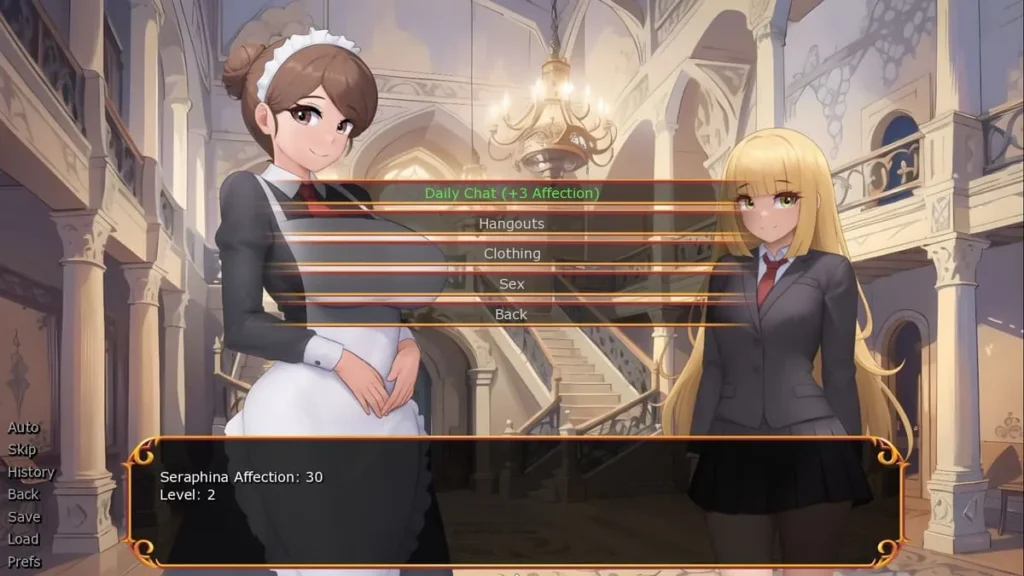
The manor of maids is far more than a gorgeous, gothic backdrop. It’s the living, breathing hub of the player-driven narrative. Each maid is not just a servant but a custodian of the manor’s secrets, a character with her own loyalties, fears, and hidden knowledge. From the stern head maid who maintains tradition to the cheerful gardener who knows all the hidden passages, your relationships with them form the bedrock of your experience. This is where the interactive storytelling game mechanics truly shine.
Your choices here aren’t about good or evil. They’re about attention, empathy, and strategy. Will you help the kitchen maid find her lost heirloom, strengthening her trust so she later shares a crucial rumor? Or will you dismiss her, focusing on a more “important” task, only to find a door later locked because she holds the key and no reason to help you? The manor of maids operates on a web of social cause and effect. A kindness shown in the east wing can ripple into an unexpected alliance in the west wing chapters later.
I learned this the hard way. Early on, I witnessed a minor confrontation between two maids. I could intervene, side with one, or walk away. Busy with the “main” quest, I walked away. I didn’t think of it again until much later, when I needed unified help during a crisis. The division I’d allowed to fester had deepened, making them unwilling to cooperate. My “neutral” choice had actively shaped the world into a more difficult place. Conversely, on a replay, investing time in mediating their dispute created a powerful ally duo that saved me hours of frustration.
The game brilliantly tracks these branches without holding your hand. For deeper immersion, I developed a personal system. I kept a simple journal, but you can use the in-game “Memory” album as a guide. Pay attention to:
- Names and Connections: Jot down which maid is friends with whom, and who has a grudge.
- Promises Made: The game doesn’t have a quest log for every tiny promise. Remembering you said you’d look into something builds authentic relationships.
- Time of Day: Some maids and secrets are only available at night or in specific locations during the day.
To help visualize the branching paths, consider how a single morning in the manor of maids can diverge:
| Your Morning Choice | Immediate Result | Long-Term Narrative Branch |
|---|---|---|
| Have breakfast in the main hall. | Overhear a public argument between Elara and the Steward. | Unlocks direct, confrontational political quests aligned with the main house power struggle. |
| Help the librarian maid in the east wing. | Find a hidden diary page about the manor’s founding. | Opens a secret lore path about the source of the family’s magic, involving Kaelen’s interests. |
| Investigate strange noises in the servant’s quarters. | Discover a maid practicing forbidden magic out of fear. | Creates a confidential ally who provides stealth help and reveals “behind-the-stairs” gossip channels. |
This level of detail makes the manor of maids feel genuinely alive. You’re not passing through a setting; you’re weaving your own unique tapestry within it, one choice at a time. 🔍
Unpacking the Biggest Plot Twists in Unveiling the Unknown
Ah, the Unveiling the Unknown plot twists. This is where the game earns its title and then some. The twists here aren’t just shocking reveals for the sake of it; they are the direct, often heartbreaking, consequences of the player-driven narrative you’ve been shaping. They feel earned because, in a very real sense, you helped build the conditions for them.
The game masterfully plants seeds from the very beginning. A throwaway line about a family portrait, a book title glimpsed on a shelf, the specific flower on a maid’s uniform—all of these can be clues. The biggest twists often don’t feel like they come out of nowhere; they feel like a sudden, stunning clarity, like the final piece of a puzzle you didn’t even know you were assembling. The central question the narrative asks—what is the true cost of heroism and legacy?—gets answered in wildly different ways based on your path.
Let me describe a pivotal moment from my playthrough. After diligently building a rapport with Kaelen and uncovering his research, I faced a critical choice during a magical calamity. The “obvious” hero choice was to support Elara’s plan for a grand, dominating counterspell. Kaelen proposed a quieter, sacrificial ritual that would contain the problem but require a permanent cost from him. Choosing Kaelen’s path was a defining moment. It wasn’t labeled “Good” or “Evil.” It was a choice between public, triumphant heroism and private, costly resolution. My choice, fueled by my understanding of their rivalry and the world’s needs, led to a twist that redefined the source of the family’s power and cast Elara’s entire journey in a tragic, new light.
To give you a spoiler-free taste of the narrative rollercoaster, here are 5 key types of plot twists you might encounter:
- The Foundational Lie: The very reason you’ve been given for being at the manor is incomplete or utterly false.
- The Switched Destiny: The twin “born with power” might not be the one you think.
- The Servant’s Secret: A maid you’ve grown close to holds a title or history that changes everything.
- The Price of Power: The family magic has a hidden, devastating source that you must confront.
- The True Antagonist: The force opposing you is not a person, but a systemic consequence of past choices, making “victory” a complex concept.
These Unveiling the Unknown plot twists work because they are personal. They don’t just happen to you; they happen because of you. They challenge the very idea of a singular “true ending,” suggesting instead that every ending is true to the choices you made. This philosophy is what elevates Unveiling the Unknown from a great visual novel to a masterpiece of interactive storytelling game design. It’s a story that stays with you, not for the scenes you saw, but for the paths you carved and the truths you decided to unveil. 🦋
The addiction comes from this beautiful, terrible power. You are an author in this world, and the Unveiling the Unknown story respects your agency enough to let you write both triumphs and tragedies. So dive back into that manor of maids, seek out the overlooked twin Kaelen, and embrace the unpredictable cascade of your choices. The most profound secrets aren’t hidden in locked rooms—they’re hidden in the echoes of your own decisions.
From the shadowy corners of the manor of maids to the gripping multiple game endings that hinge on your every decision, Unveiling the Unknown delivers an unforgettable blend of mystery, choice, and character depth. My own adventures as Kaelen taught me that true power lies in those subtle game narrative choices—whether fueling rivalry or forging unexpected bonds. If you’ve felt the pull of its world, replay with a fresh perspective, experiment with risky paths, and chase those hidden secrets. Grab your next playthrough today, share your favorite ending in the comments, and let’s keep unveiling together—what path will you take?